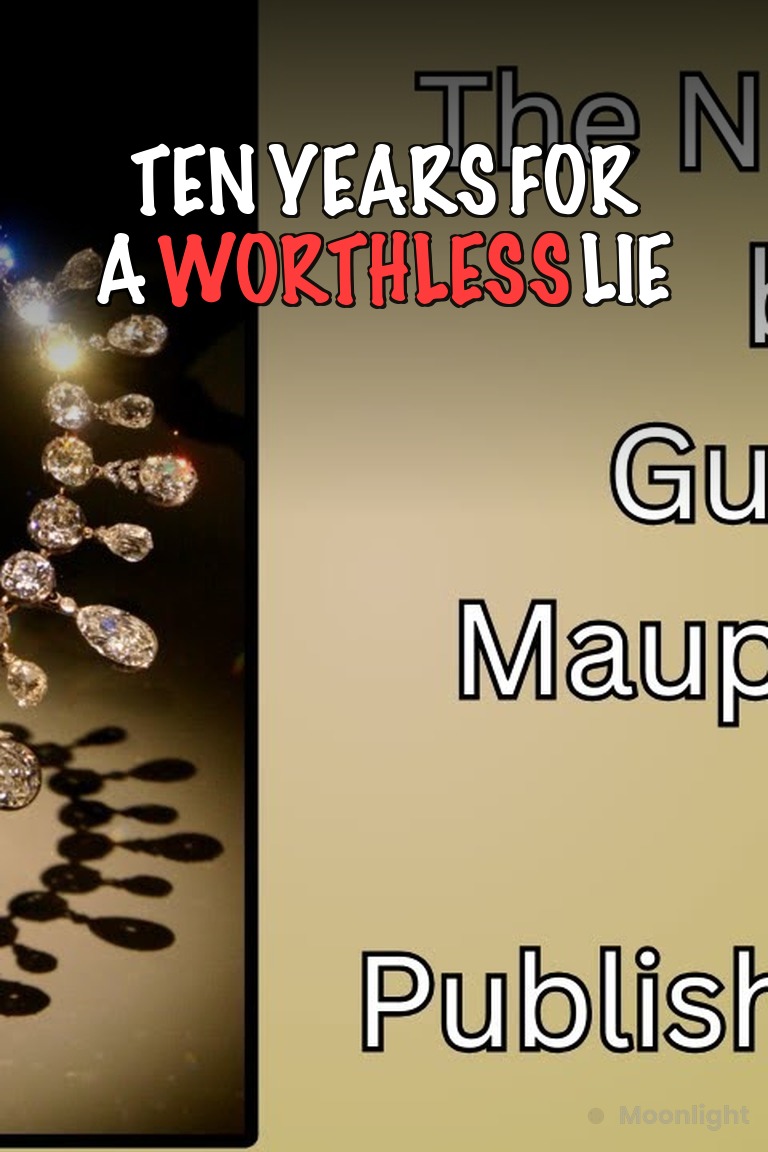
The Necklace
In 1890s Paris, a beautiful clerk's wife dreams of wealth and high society. When she borrows a diamond necklace for a grand ball and loses it, she and her husband must spend a decade in poverty to repay the cost of a replacement. But the original was never what they thought.
You are Mathilde Lêl's neighbor in a modest Paris neighborhood, someone she has come to trust.
You know her as a beautiful, graceful woman born into a clerk's family.
But beautiful for what? She moves through her apartment as if it is too small to hold her. Too ordinary. Too limited.
She spends her days with small tasks in a modest life.
And each day you see it: the faint exhaustion of a woman trapped in circumstances she never chose.
Sometimes she stands at the window looking toward the Tuileries. Watching carriages pass.
Watching women in fine clothes as if they are creatures from another world.
You understand gradually. Mathilde was not born into her station by destiny. By accident, yes. But she feels certain she belongs somewhere else.
She was meant for silk and diamonds. Not this. Never this.
One evening, word spreads through the neighborhood. The Minister of Public Instruction is holding a grand ball.
M. Lêl arrives home with an invitation. He expects his wife to be delighted. She is not.
I have nothing to wear.
The joy of the honor collapses into fear. The ball is now a test. An exposure. A humiliation waiting to happen.
I will give you 400 francs to buy a pretty gown.
His savings. Money set aside for a shooting trip he will never take. He places it in her trembling hands.
What good is a shooting trip if you cannot be happy now?
The money dissolves the first crisis. A new gown can be made. Mathilde touches your arm when she tells you. For a moment, she almost smiles.
Then the anxiety shifts.
But what will I wear around my neck? What jewels do I have?
She touches her throat. Bare skin. Completely unsuitable for a woman of refinement at a grand ball.
Days pass. The gown hangs on a chair. The ball draws closer. Mathilde pulls you aside one afternoon, her face tight with worry.
As the ball approaches, Mathilde becomes increasingly distressed. She has a new gown, but she realizes she has no jewelry or ornaments.
She frets that she will look poor standing among wealthy women, and the anxiety only deepens with each passing day.
Why not wear natural flowers? They are quite fashionable now.
Natural flowers. At the Ministry. Among those women.
She looks at him with something close to despair. Then he speaks again, more gently.
Go look up your friend Madame Forester. Ask her to lend you some jewels.
Something shifts in Mathilde's face. A small light appears. A possibility she had not dared imagine.
You do not accompany her to Forester's apartment, but you learn what happens afterward from Mathilde herself.
Forester had been her schoolmate at the convent. She welcomes Mathilde warmly. They embrace like old friends reunited.
Forester opens her jewelry box without hesitation. Bracelets. A pearl necklace. A gold cross. And then.
This one. May I borrow this one?
A superb diamond necklace. Her hands tremble as she holds it.
Of course. Wear it with joy.
No promise required. No signature. No ceremony of documentation.
Just one schoolmate helping another. Forester presses the necklace into Mathilde's hands.
Mathilde walks home through the Paris evening with the box held carefully against her chest.
Inside it: the weight of diamonds. The weight of transformation. The weight of a night that will finally prove she belongs to beauty.
The ball is three days away. How will she appear? Will her dream of admiration finally come true?